
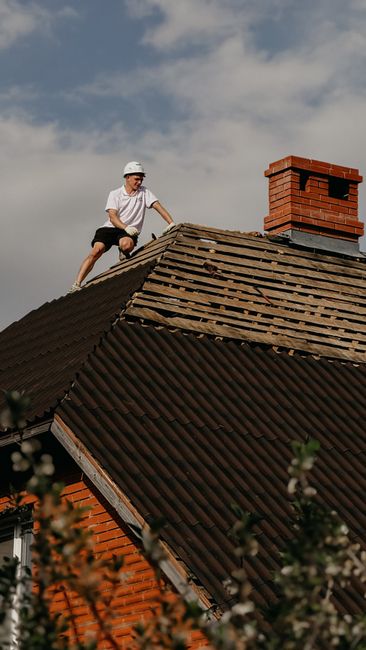
What is a roof tear-off?
A roof tear-off is the removal of existing roofing materials down to the roof deck before a new roofing system is installed. Unlike an overlay, which places new shingles over an existing layer, a tear-off exposes the underlying structure so it can be inspected and repaired if necessary.
For homeowners in Churchville, this process is often recommended when a roof has several layers, widespread deterioration, recurring leaks, or damaged underlayment. The work is more involved than simply adding new shingles, but it provides a clearer view of the roof’s actual condition.
What happens before the old roofing is removed?
Before removal begins, the work area is prepared to protect the house and surrounding property. This usually includes covering siding, windows, doors, landscaping, decks, and nearby surfaces that could be affected by falling roofing debris.
Outdoor items may need to be moved away from the walls. Vehicles should not be parked close to the house during removal, and residents may want to take down fragile wall decorations or secure objects inside rooms beneath the roof. Tear-off work creates vibration, noise, and temporary disruption.
Weather also matters. Roofing materials can be removed only when the roof can be protected from rain, snow, and strong wind. In the local climate, changing conditions, freeze-thaw cycles, and winter moisture make temporary roof protection especially important.
How is the old roofing removed?
Workers typically begin at the roof edges and remove shingles, flashing, underlayment, and other roof coverings with specialized hand tools. The material is directed toward collection areas or containers rather than allowed to remain scattered around the property.
The removal process may reveal more than one layer of shingles. Older homes sometimes have multiple roofing layers installed over the years. Each added layer increases weight and can conceal problems such as soft decking, improper flashing, or trapped moisture.
Roof tear-off is noisy. Residents should expect repeated impacts, scraping, walking overhead, and equipment movement. The loudest activity usually occurs during the removal phase and may continue for several hours depending on the roof’s size, pitch, accessibility, and number of layers.
What happens if damaged wood is found?
The roof deck is the wood sheathing beneath the roofing materials. Once the old covering is removed, the deck can be inspected for rot, delamination, water staining, holes, sagging, or areas weakened by long-term leaks.
Not every dark mark requires replacement. Some staining may be old and dry, while soft or deteriorated wood is a structural concern. Damaged sections generally need to be removed and replaced with suitable sheathing before the new roof is installed.
This is one reason the final scope of a tear-off cannot always be known from a ground-level inspection. A roof may appear worn but still have sound decking, or it may look serviceable while concealed damage exists around chimneys, valleys, roof edges, skylights, or plumbing penetrations.
Homeowners should clarify in advance how unexpected deck repairs will be handled. A written explanation of the possible repair method and how added work is documented can prevent confusion once the roof is open.
Which parts of the roof are replaced during a tear-off?
A complete roofing system includes more than shingles. Depending on the roof design and its condition, the work may involve:
- Shingles or another roof covering
- Underlayment beneath the roof covering
- Ice-barrier material near vulnerable roof edges and penetrations
- Metal drip edge along roof edges
- Flashing around chimneys, walls, vents, and valleys
- Pipe boots and other roof penetrations
- Ridge vents or other ventilation components
- Damaged roof decking
Flashing deserves particular attention because many leaks begin where the roof meets another surface. Reusing bent, rusted, improperly installed, or deteriorated flashing can undermine the performance of an otherwise new roof.
Roof ventilation is also reviewed during replacement. Adequate intake and exhaust ventilation helps manage heat and moisture in the attic, but ventilation changes should be compatible with the roof design and the building’s existing airflow.
How long does a roof tear-off take?
A straightforward residential tear-off and replacement may be completed in one working day, while larger, steeper, more complex, or heavily layered roofs can take longer. The timeline can change because of weather, hidden wood damage, difficult access, chimney work, or delays involving inspections and material delivery.
The removal itself is usually only one stage of the project. A typical sequence includes:
1. Site protection and setup
2. Removal of existing roofing
3. Inspection of the exposed deck
4. Replacement of damaged sheathing
5. Installation of underlayment, flashing, and edge materials
6. Installation of the new roof covering
7. Cleanup and final inspection
A roof should not be left exposed unnecessarily. If work must pause, temporary protection should be installed and checked, particularly before rain or overnight temperature drops.
What should homeowners expect during cleanup?
Roofing debris can collect on lawns, driveways, walkways, gutters, and around foundation plantings. Magnetic sweeping is often used to locate loose nails, but homeowners should still use caution after the work is complete.
Children and pets should stay away from the work area until cleanup is finished. Small pieces of shingle, fasteners, and sharp metal can remain in locations that are difficult to see, especially near shrubs, fence lines, and driveway edges.
Gutters may also contain granules and debris after tear-off. Some material is expected, but gutters and downspouts should be checked so that loose debris does not obstruct drainage.
Does a roof tear-off require a permit in Churchville?
Roof replacement work may require a building permit because it can fall under New York State building and energy codes, along with local administration requirements. Rules can depend on the property’s location, the extent of the work, and whether structural repairs or other alterations are involved.
In Churchville, homeowners should verify permit requirements with the appropriate local code enforcement office before work begins. The permit process may also determine whether inspections are needed. Permit requirements are separate from the quality of the roofing installation, but both affect whether the completed work is properly documented.
What are common misconceptions about tear-offs?
One common misconception is that a tear-off is unnecessary if new shingles can be installed over old ones. An overlay may be allowed in some situations, but it does not provide the same opportunity to inspect the roof deck, replace hidden damage, or correct poor flashing.
Another misconception is that every roof needs all decking replaced once the old shingles come off. In many cases, most of the deck remains usable. Replacement is generally limited to areas that are structurally unsound or unsuitable for the new roof.
Some homeowners also assume that a roof can be torn off safely in any season. Cold temperatures, snow, rain, ice, and high wind can affect worker safety, temporary protection, material handling, and installation quality. A carefully timed project is often more reliable than rushing work during unsuitable conditions.
What should be confirmed before work starts?
Before a tear-off begins, homeowners should understand:
- How many existing roofing layers are expected
- Whether damaged decking is included or handled separately
- How exposed areas will be protected from weather
- Which flashing and ventilation components will be replaced
- How debris, nails, and gutters will be cleaned
- What inspections or permits apply
- How weather delays will be managed
- Which areas of the property need to remain clear
A tear-off is disruptive, but it also provides valuable information about the condition of the roof system. The most important stage is not simply removing old shingles; it is inspecting the exposed structure and rebuilding the roof with sound decking, reliable water-shedding details, and protection suited to the area’s wet, snowy, and freeze-thaw conditions.
