
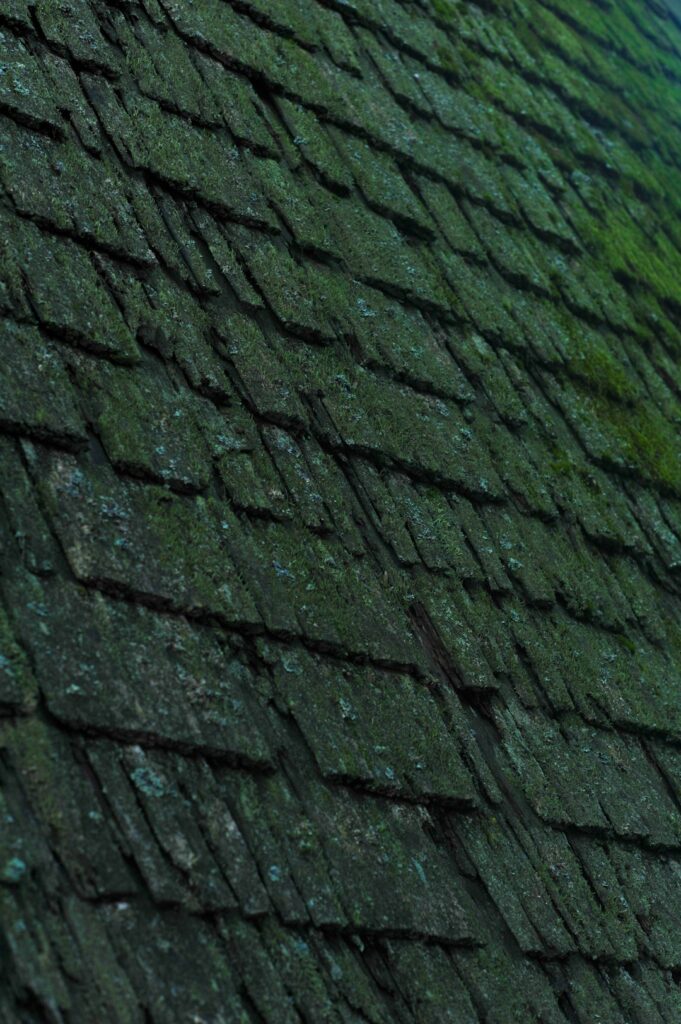
Roof stains are common on homes in Churchville, NY, especially after years of rain, snow, humidity, falling leaves, and changing temperatures. Some stains are mostly cosmetic, while others point to moisture damage, deteriorating materials, or drainage problems that should not be ignored.
What do roof stains usually mean?
A roof stain is a visible change in color or texture caused by biological growth, metal corrosion, dirt, trapped moisture, or water entering the roofing system. The appearance often provides clues about the source.
Common examples include:
- Dark gray, brown, or black streaks: Often caused by algae or airborne debris. Algae can spread across asphalt shingles and create long vertical streaks.
- Green patches or fuzzy growth: Usually moss, particularly in shaded areas that stay damp.
- Rust-colored marks: May come from corroding flashing, exposed fasteners, metal vents, or runoff from nearby metal components.
- Brown or yellow ceiling stains: Usually indicate water intrusion inside the home rather than a surface-only roof stain.
- White, chalky marks: Can result from mineral deposits, weathered roofing granules, or residue left after repeated moisture exposure.
- Stains near chimneys, valleys, or roof edges: Often deserve closer attention because these areas collect water and contain seams or flashing.
A stain does not automatically mean the entire roof needs replacement. The location, pattern, age of the roof, and condition of surrounding materials matter.
Are dark streaks on shingles caused by mold?
Usually, dark streaks on asphalt shingles are caused by algae rather than indoor mold. A common type of roof algae spreads across damp roofing surfaces and appears as black, blue-gray, or brown discoloration.
Algae may not immediately weaken a roof, but it can hold moisture against the shingle surface and make the roof look uneven or neglected. Repeated growth may also accompany loss of protective granules, especially on older shingles.
The presence of algae does not prove that water is entering the home. However, streaks should be inspected more carefully if they occur with soft shingles, exposed underlayment, missing granules, or damp attic insulation.
Why does moss grow on some roofs?
Moss grows where a roof remains cool and wet for extended periods. Shaded roof slopes, areas beneath overhanging trees, and sections affected by poor drainage are more likely to develop moss.
The seasonal pattern in Churchville can contribute to this problem. Snow cover, spring rain, humid summer periods, and autumn leaves may keep roofing materials damp longer than expected. Moss is also more common on roofs with low sunlight exposure.
Moss can lift shingle edges as it grows beneath them. That lifting allows wind-driven rain to reach areas that should remain covered. The roots and debris may also slow water runoff, increasing the chance of moisture collecting on the roof.
Moss should not be scraped aggressively from shingles. Pulling or brushing it forcefully can remove granules and damage the protective surface.
Can roof stains be cleaned safely?
Some roof stains can be treated, but cleaning requires care because shingles are easier to damage than they appear. High-pressure washing is generally unsafe for asphalt roofing. The force can loosen granules, break seals, and drive water beneath the shingles.
A safer approach may involve:
- Keeping people and pets away from the work area.
- Using a roof-compatible cleaning solution according to its label.
- Applying the solution gently rather than scrubbing aggressively.
- Allowing the treatment to work over time.
- Rinsing only as directed and avoiding concentrated runoff on plants or lawn.
- Working from a stable location without walking on fragile, wet, steep, or icy roofing.
Never mix cleaning chemicals. Some combinations create dangerous fumes or harmful runoff. Ladder work also presents a serious fall risk, particularly on sloped surfaces, near roof edges, or during damp weather.
For many homes, ground-level prevention is more useful than repeated roof cleaning. Keeping gutters clear, trimming branches that block sunlight, and reducing leaf buildup can make the roof less favorable for moss and algae.
What should not be used on a stained roof?
Several common cleaning methods can shorten roof life.
Avoid:
- Pressure washers
- Wire brushes or stiff scraping tools
- Undiluted household bleach
- Solvents not labeled for roofing materials
- Walking repeatedly across brittle shingles
- Metal tools that tear or puncture the surface
- Coating over stains without correcting the moisture source
A roof coating may hide discoloration temporarily without solving trapped moisture, damaged flashing, or poor ventilation. Covering an active leak can make later repairs more difficult to identify.
What do indoor ceiling stains indicate?
A brown ceiling ring, bubbling paint, peeling drywall, or damp attic insulation usually indicates that water has moved beyond the roof surface. The stain may appear far from the actual entry point because water can travel along rafters, roof decking, insulation, or framing before reaching the ceiling.
Check the attic, if it can be reached safely, for:
- Wet insulation
- Darkened wood
- Water trails
- Damp roof decking
- Daylight visible through the roof
- Musty odors
- Rust around fasteners or metal components

A ceiling stain that appears after rain or snow deserves prompt attention. Place a container beneath active dripping if necessary, but do not climb onto the roof during wet, icy, or windy conditions. Electrical fixtures near water should be treated as a safety concern.
How can roof stains be prevented?
Prevention begins with controlling moisture and improving drainage around the roof.
Useful maintenance includes:
- Cleaning gutters and downspouts before winter and after heavy leaf fall.
- Checking that downspouts discharge water away from the foundation.
- Removing leaves and branches that collect in valleys.
- Trimming vegetation that keeps roof sections shaded and damp.
- Watching for loose flashing, lifted shingles, and damaged vent boots.
- Keeping attic ventilation and insulation in reasonable condition.
- Inspecting after severe wind, heavy snow, or ice-related events.
Gutters do not directly prevent algae, but clogged gutters can increase moisture around roof edges and contribute to staining on fascia, soffits, and siding. Ice buildup can also expose weak areas near eaves and flashing.
When is a stain a sign of a larger roofing problem?
A stain is more concerning when it appears with physical damage or repeated moisture. Warning signs include:
- Shingles that are curled, cracked, blistered, or missing
- Granules collecting heavily in gutters
- Moss lifting shingle edges
- Rusted or separated flashing
- Repeated ceiling stains
- Soft decking or sagging roof sections
- Water entering near chimneys, skylights, vents, or valleys
- A musty attic after precipitation
A qualified roofing inspector is appropriate when roof access is unsafe, a leak is active, or the source cannot be identified from the attic and ground. Safety and accurate diagnosis are more important than attempting a difficult cleaning project.
Roof stains should be treated as clues rather than judged by color alone. Surface algae may require careful maintenance, while a stain inside the home may signal water intrusion. Understanding the difference helps residents respond appropriately and protect the roof structure from avoidable moisture damage.
